
26
How to Start Your First Compost Pile
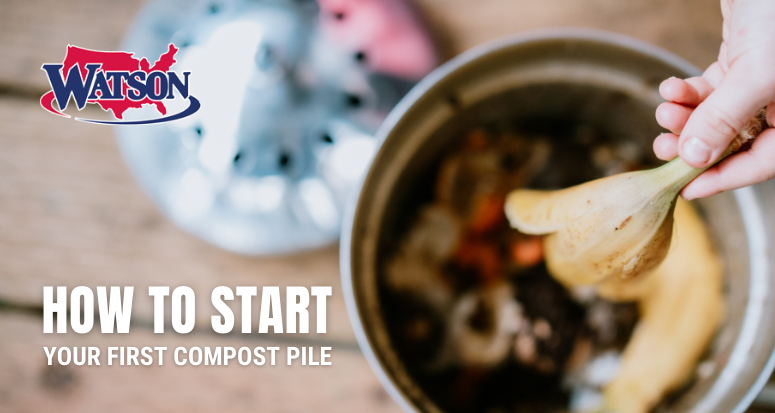
If you're looking for a new home, one thing you may be thinking about is gardening and landscaping. Many homes have plenty of yard space for growing plants. You may want a home with room for something else, too: a compost pile. If you've never had one before, they're a great tool for anyone with a green thumb. Here's how to start your first compost pile.
How Does Composting Work?
An estimated 30-40% of the food supply in this country becomes food waste. Composting takes those leftover scraps, breaks them down, and turns them into a nutrient-rich substance that, when added to soil, facilitates plant growth, from flowers to trees to vegetables and more.
Turning organic matter into compost requires water, air, and microorganisms. Microorganisms can take the form of bacteria and fungi, as well as earthworms and certain bugs. You also need organic matter that's rich in carbon (brown materials) and organic matter that's rich in nitrogen (green materials). The water and air help the microorganisms to decompose carbon and nitrogen in the plant matter. Those elements then act as nutrients to help future plants grow.
What Can and Can't Be Composted
Food waste isn't the only thing that can go into a compost pile. You can also use twigs and leaves that come from raking the yard and the clippings from mowing the lawn.
However, some things shouldn't be composted. Meat, dairy, oils, and fats can attract local wildlife. Don't compost animal waste either. You can compost wood ash, but not coal ash or charcoal. Finally, don't compost weeds, or plants with diseases, as they can cause problems for whatever you try to grow next.
Building Your Compost Pile
Find a large, open area in your yard that's level and allows for good water drainage. If water pools up, it can ruin your compost. Next, build a wooden enclosure around the area - four sides, but no floor. Clear out any grass in that area as well, so the pile sits directly on the dirt. Build a door or panel into one side that can be opened, allowing access to your compost.
Once you've built the enclosure, it's time to add your scraps. This requires a bit of planning. Your compost pile should consist of even layers of alternating brown and green materials, starting with brown.
Brown materials are "dry" items, such as dry leaves, branches, wood chips, and pine needles. Green is the "wet" materials - food scraps, grass clippings, green leaves, etc. Your pile should be approximately 2/3 brown to 1/3 green.
Maintaining Your Compost Pile
Your compost pile should be watered and turned regularly. Give it light water every day or two as needed to keep the pile damp but not saturated. If you squeeze the dirt and water flows out, it's too wet.
Turning the pile keeps it aerated, so it decomposes better. Stick a shovel or pitchfork into the pile and turn it over, mixing up the various materials. Do this every two weeks or so.
Once it's ready, take the compost from the bottom of the pile and add it to the dirt of whatever you're growing.
We can help you find the perfect house to create your compost pile and grow beautiful gardens and landscaping that any homeowner would be proud of. Contact us to learn more!